Search results
France’s Biens Mal Acquis Affair: Lessons from a Decade of Legal Struggle
Teodorin Obiang, vice president of Equatorial Guinea, is facing trial in Paris on money laundering and corruption charges—due almost entirely to a 10-year legal campaign by French anti-corruption groups.
The Trial of Bosco Ntaganda at the ICC
Background information about the decision of former Congolese militia leader Bosco Ntaganda to take the witness stand in his own defense at the International Criminal Court (ICC) in The Hague.

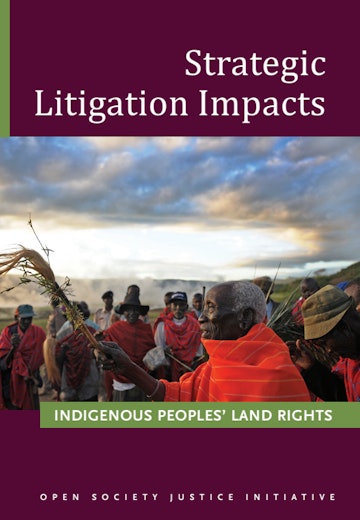
Strategic Litigation Impacts: Indigenous Peoples’ Land Rights
This comparative study examines the ways indigenous communities in Malaysia, Paraguay, and Kenya and their advocates are using litigation in an effort to defend their rights and win compensation.
Case Digests: International Standards on Ethnic Profiling: Standards and Decisions from the European System
A review of European legal standards, including jurisprudence and commentaries, which address ethnic profiling.
Understanding National Progress: A Cross Regional Exchange on Access to Justice
A summary a meeting organized by the Open Society Justice Initiative in Washington, D.C., in October 2016, which focused on developing effective measurements for access to justice.
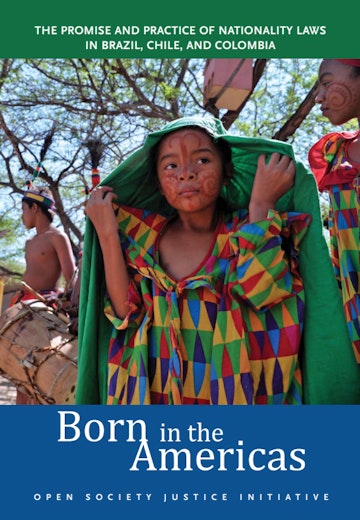
Born in the Americas: The Promise and Practice of Nationality Laws in Brazil, Chile, and Colombia
This examination of citizenship regimes in Brazil, Chile and Colombia finds weaknesses that create the risk of statelessness.
ICC Katanga Reparations
Judges at the ICC will determine reparations for victims of a brutal massacre that led to the conviction of Germain Katanga.
Strategic Litigation Impacts: Equal Access to Quality Education
This comparative study, based on research in Brazil, India, and South Africa, assesses how the power of the litigation is being harnessed in the pursuit of adequate basic education for all.

ICC Trial: Bemba et al.
Sentences for witness tampering will be delivered at the International Criminal Court, in a case that involved a conspiracy to subvert the course of justice.
Headscarves and Discrimination before the Court of Justice of the European Union
The EU's top court will rule on whether an employer can refuse to allow a Muslim woman to wear a headscarf at her place of work.
Recent Developments at the Extraordinary Chambers in the Courts of Cambodia: November 2016
The ECCC's Supreme Court affirmed life sentences given to the two senior surviving Khmer Rouge leaders, but severely criticized the handling of their trial.
The Trial of Dominic Ongwen at the International Criminal Court
Dominic Ongwen, the alleged senior leader of the Lord’s Resistance Army and a former child soldier, is charged with 70 counts of crimes against humanity and war crimes.
Witness Interference in Cases before the International Criminal Court
Research suggests that witness interference has been alleged in nearly every case before the ICC.
Eroding Trust: The UK’s Prevent Counter-Extremism Strategy in Health and Education
Since 2015, the UK’s counter-extremism strategy has imposed a statutory duty on health and education professionals to report individuals at risk of being drawn into terrorism.
The Impacts of Strategic Litigation on Indigenous Peoples' Land Rights
A summary of discussions held in June, 2016, at a conference in Nairobi, Kenya, convened by the Open Society Justice Initiative.
South Africa: Public Trust Theory as the Basis for Resource Corruption Litigation
South Africa’s 1994 Constitution has led to statutes that incorporate the doctrine of public trust into environmental and natural resources law—strengthening potential legal remedies for challenging corruption.
Employer’s Bar on Religious Clothing and European Union Discrimination Law
The Open Society Justice Initiative calls on the Court of Justice of the European Union to rule that equality law is violated when an employer on the grounds of “neutrality”—bans its staff from wearing any religious clothing.
Legal Remedies for Victims of Bribery under United States Law
The U.S. Foreign Corrupt Practices Act has enabled "follow on" claims from foreign governments and others who suffer losses as a result of corrupt dealings. But many questions about the status of such claims remain open.
Undeniable Atrocities: Confronting Crimes against Humanity in Mexico
This report argues there is a “reasonable basis” to believe that crimes against humanity have been committed against civilians in Mexico over the past decade.

International Crimes
What is the difference between “ordinary” crimes and crimes against humanity? When lawyers talk about international law, what does that mean?